Joe Rantz and Harry Rantz’s father–son relationship
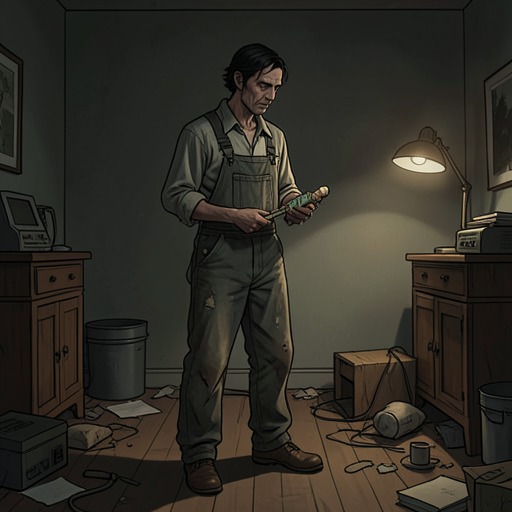
The Boys in the BoatJoe Rantz and Harry Rantz’s father–son relationship is shaped by a stark contrast: the intimate routines through which they once shared a life, and the brief, devastating moment when Harry leaves Joe behind. Their bond gives Joe memories of safety and belonging, but its rupture also prompts a defining resolution. Harry’s advice about finding happiness alone becomes part of the language Joe uses to make sense of abandonment and to claim responsibility for his own future.
A bond made of shared routines
Before their separation, closeness between father and son appears less in declarations than in ordinary acts of attention. In the family’s time at Boulder City, Joe remembers playing gin rummy with Harry at the kitchen table while Thula Rantz practiced violin. He also remembers standing with his father beneath the hood of the family car as Harry explained what its parts did and how they worked. These were not grand occasions; their intimacy rested on being together and on Harry making room for Joe in the practical details of his life.
The relationship also included a quiet, recurring ritual at night. Father and son sat on the cabin porch beneath the Idaho sky, saying little as they watched for falling stars. Harry told Joe, “Keep on watching,” and urged him to keep his eyes open because a falling star might appear at any time. The saying carried a practical instruction as well as the memory of shared attention: keep looking, because something unexpected may become visible. After Joe was left to live at the schoolhouse, he could still watch the sky, but doing so alone did not feel the same. The scene makes the loss legible through a small change in circumstance: the stars remain, while the companionship that gave the ritual its meaning is gone.
Separation and the choice Harry makes
When Harry prepares to leave Sequim, he tells Joe that he plans to go to Seattle and perhaps later to California. He says that Thula wants Joe to stay, and that he cannot remain with him because the younger children need a father more than Joe does. Harry describes Joe as nearly grown. His explanation places the departure within competing family needs, but it does not soften what it means for Joe: his father is leaving while he is being told that he must manage without him.
Joe’s response records the shock before he can put it into words. He freezes, his face turns blank, and he reaches for the rough cedar railing to steady himself. Only then does he ask, “But can’t I just come along?” Harry answers no, and tells him that he has learned that happiness requires learning how to be happy on one’s own. The exchange is both a practical decision and a severing of the life Joe expected to continue. Harry returns to the car; Joe watches its taillights disappear in the rain. The parting takes less than five minutes, but the scene’s compressed duration heightens the imbalance between the brevity of the decision and its consequence for the son left behind.
Advice carried into abandonment
The next morning, the physical details of Joe’s life offer no immediate comfort: rain still pounds the roof of the half-finished house, and the previous night’s wind moans in the fir trees. Joe remembers an earlier period of fear and loneliness in his aunt’s attic in Pennsylvania. The return of that feeling links Harry’s departure to an older experience of being alone, without suggesting that the circumstances are identical. The relationship’s rupture is registered in Joe’s body and surroundings before he finds a way to respond to it.
He gets up, lights the woodstove, fries bacon, and makes coffee. As he eats, his thinking steadies and he turns Harry’s injunction toward a decision of his own. Joe is tired of being frightened, hurt, abandoned, and left asking why. He resolves not to let such a situation define him again: he will make his own way and find his own route to happiness. The resolve is not simply an echo of Harry’s words. Joe says he likes other people and recognizes that friends can help push away loneliness; what he rejects is dependence on family or anyone else for his sense of who he is. His response therefore separates self-reliance from isolation. Harry’s departure hurts him, but Joe refuses to conclude that closeness itself has no value.
A lesson that outlasts the parting
Joe also carries forward a lesson he associates with his father: problems have solutions, although those solutions may not be found where people expect them. In the half-finished house, he recalls the cauliflower mushroom he had learned about in the woods at Boulder City, a source of food in an unlikely place. The remembered discovery connects Harry’s earlier teaching to Joe’s new circumstances. In both, survival depends on attention, resourcefulness, and a willingness to look beyond the obvious answer.
That continuity complicates the separation. Harry has left, but Joe’s remembered lessons—how an engine works, how to keep watching, how to search for an unexpected solution—remain part of the equipment with which he faces life alone. The relationship thus changes from daily companionship into an inward inheritance. Joe’s determination to rely on himself arises directly from the pain of being left, yet the means by which he begins to do so include knowledge and habits first shared with his father. In these episodes, the bond is neither erased by the departure nor repaired by it: its earlier closeness survives as memory, while Joe’s independence becomes the consequence he draws from its rupture.